







.jpg)


.jpg)

















.jpg)
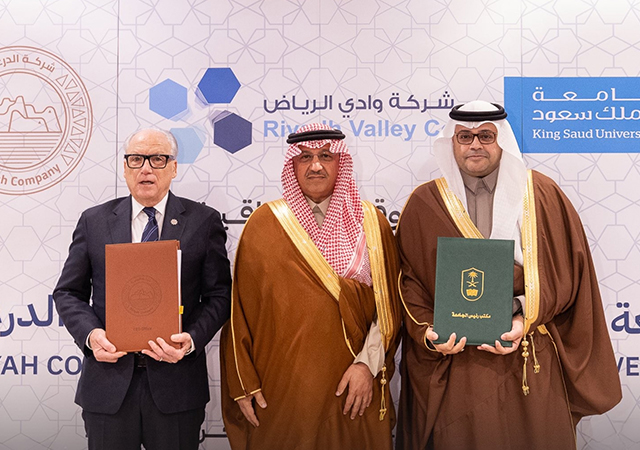


















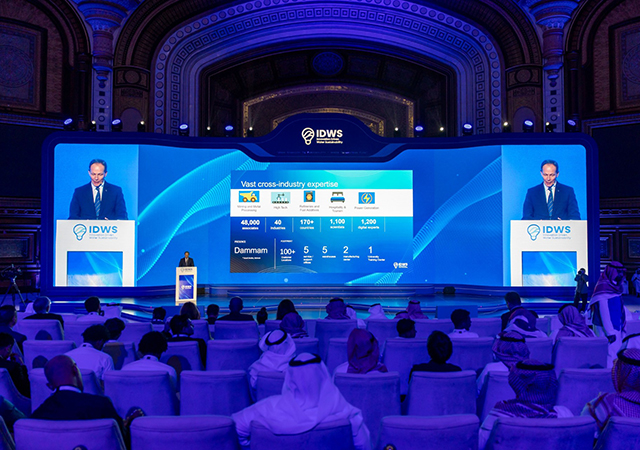


A new model form construction contract was unveiled in November at the annual conference of the International Islamic Centre for Reconciliation and Arbitration (IICRA) in Dubai. The Islamic-Based Construction Contract (IBCC 2025) has been developed by a multidisciplinary drafting committee comprising legal, engineering and financial experts.
The IBCC 2025, aimed at a clearly defined market and underpinned by a distinct philosophical approach, offers something genuinely different. The IICRA describes the contract as combining modern construction practices with Shari’ah-compliant provisions with the stated objectives of reducing disputes, supporting sustainability and setting higher ethical standards. The contract, in the IIRCA’s words, comprises provisions that are free from injustice, ambiguity, deception and fraud; all of this being grounded in Islamic Shari’ah principles as well as the latest global engineering and legal practices.
IBCC 2025 has the “look and feel” of an international standard model contract. The General Conditions comprise 32 clauses and fill 170 pages. It is build-only (employer’s design) and the terminology is industry-standard.
How different is this from using other forms? Drafting and negotiating construction contracts in the Middle East has always been, in part, an exercise in working out how to fit essentially common law-based contract terms into a local jurisprudential setting. Previous discussions in Gulf Construction have often looked at ways in which Islamic legal principles (and the various national codes derived from those principles) will affect interpretation and operation of a contract. The most common topics include the principle of good faith, enforceability of liquidated damages provisions, time bars on claims, the treatment of interest and termination for cause and for convenience.
As always, my comments on this are generalised and are made without the benefit of qualifications in Islamic Law, but it is worth examining the treatment of a couple of these topics in IBCC 2025 – which only scratch the surface of the impact of Islamic legal principles.
Earlier, we have looked at the question of enforceability, under Islamic legal principles, of termination provisions without the need of a court order. The main question is whether a party’s agreement in signing the contract can be taken as true consent to a later, unilateral termination by the other party. The consensus view is that termination for cause is generally enforceable per se (subject to examination of the circumstances around its use) so long as the provision is clearly drafted to deal with the above question, that is, that notified and unremedied breach is “pre-consented” as automatic grounds for termination. This is designed to align to (for example) UAE Civil Code Article 271 which allows termination under those terms.
IBCC 2025 provides (cl.26.2) for termination for contractor’s default but this is not automatic save in urgent situations. The employer may issue a “First Notice” in response to significant contractor breach that has not been remedied in contractual timeframes, or which the contractor cannot remedy. If the breach is not remedied within 15 days of receipt of the First Notice, the employer may either seek a court order for termination or issue a Termination Notice “in situations where urgency is established” as verified by the engineer.
IBCC 2025 does not allow termination for convenience, which is no surprise. Opinions differ on whether there is any room for this under Islamic legal principles. Arguably, the provision itself might make the contract ineffective due to its existence being at the discretion of one party. And separately, any attempt to exercise this right will always raise questions as to breach of good faith obligations – especially on the disproportionality between the benefit to the terminating party and the harm to the other party.
Another well-worn topic is the enforceability of liquidated damages. Again, national laws differ but the common thread is that agreed rates of liquidated damages might be revised or even deleted by courts or tribunals on the basis of exorbitance or disproportionality between the liquidated sums and actual losses.
IBCC 2025 does provide for liquidated damages: “Delay Damages” are defined as an agreed-upon amount, calculated on a daily basis. As in other contracts, the rates might be amended for partial or sectional handover but there is no provision to govern either the original agreement of rates or the engineer’s post-delay calculation of them to take into account exorbitance or disproportionality to actual losses. Of course, the parties can still expect that a court or tribunal might do so, depending on the wider circumstances.
Discussion of just these two topics, of course, doesn’t do justice to the contract, as its notable features derive from the philosophy on which it was drafted. As stated in the Foreword to the contract, it aims at balance, equity, justice and fairness, and at fostering relationships based on trust.
IBCC 2025 is the first model form construction contract to align itself directly with the laws of this region and others whose laws are based on Islamic legal principles, as well as the wider civil law world. For contracting parties and their advisors, this form offers a real alternative in the market. It will attract attention – and users too.
* Dubai-based Stuart Jordan is the Global Head of Construction for Baker Botts, a leading international law firm. He has extensive experience in the Middle East, Russia and the UK.